If your brakes are squealing after a recent repair, there’s a good chance you were a victim of “pad slapping,” one of the most common shortcuts in the brake repair industry. At Accelerated Diagnostic and Automotive in Bennington, NE, we see this regularly: a vehicle rolls in squeaking, pulsing, or stopping poorly, all because a shop did half the job for a bargain price.
Quality brake repair isn’t just about new pads. It’s about doing the complete job correctly, every single time, because your brakes are the single most important safety system on your vehicle. They don’t just protect you and your passengers; they protect everyone else sharing the road with you. A brake job that’s rushed or done halfway doesn’t just risk a comeback visit, it risks a longer stopping distance at the exact moment you need every foot you can get. We treat every repair with that responsibility in mind, so our guests never have to wonder if the work was done right.
What "Pad Slapping" Actually Means
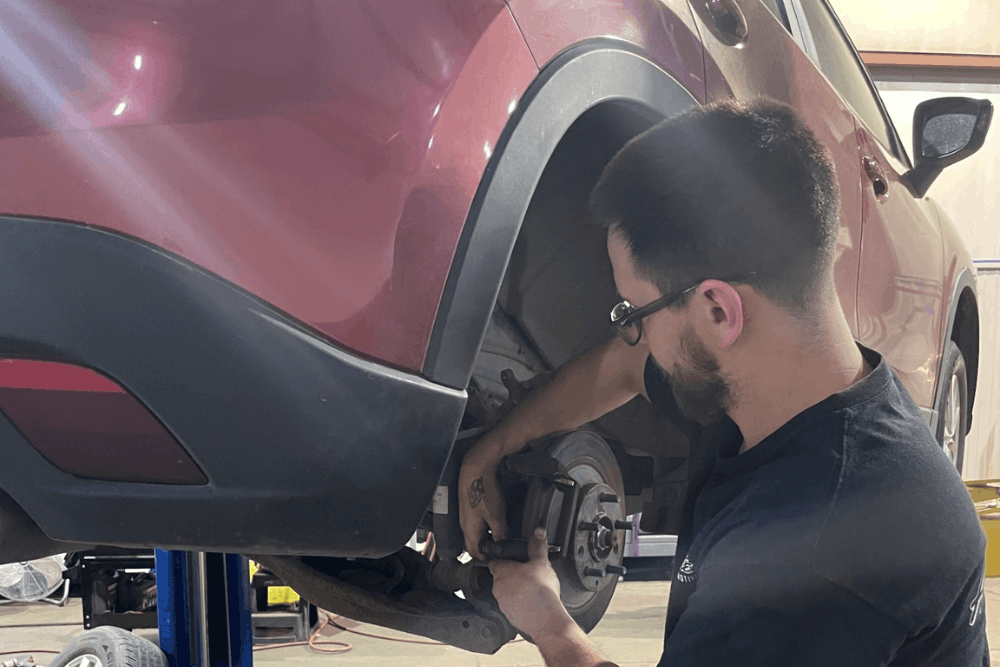
“Pad slapping” is a shop-floor term for a shortcut: new pads get installed on old, worn, or warped rotors without addressing anything else in the system. No rotor measurement. No caliper service. No hardware replacement. Just the pads.
Some shops take it a step further and machine (resurface) the old rotors instead of replacing them. Machining shaves material off the rotor’s surface to smooth it out, but every pass makes the rotor thinner. A thinner rotor runs hotter, warps faster, and is far more likely to bring back the exact pulsation and noise you came in to fix, often within months.
It’s fast. It’s cheap. And it almost always ends with squealing brakes, vibration, or a return visit within months. Your brake system doesn’t work in isolation. The pads, rotors, calipers, and hardware all function together. Replacing one piece while ignoring the rest is like putting new tires on a bent rim. You’re not fixing the problem. You’re delaying it.
How to Spot a Brake Job Done Wrong
Not every bad brake repair is obvious right away, but the warning signs show up quickly. Here’s what to watch for after a recent brake service:
Squealing or Squeaking Brakes After Repair
New pads installed on old, grooved rotors can’t seat properly. The uneven surface creates vibration between the pad and rotor, and that vibration turns into noise. Squealing right after a brake job is one of the clearest signs the rotors weren’t addressed.
Pedal Pulsation or Vibration When Stopping
If you feel a pulse or shudder through the brake pedal or steering wheel when you slow down, the rotors are likely warped or have uneven thickness. A proper brake repair includes measuring rotor runout and thickness variation before any new parts go on.
Pulling to One Side While Braking
This typically points to a stuck or partially seized caliper slide. When slides aren’t cleaned and lubricated, one caliper can drag more than the other, causing the vehicle to pull. It’s a step that gets skipped constantly in budget brake jobs.
Brakes Feel the Same or Worse After the Service
New pads on bad rotors can perform worse than worn pads on a smooth surface. If your stopping distance hasn’t improved, the rotors needed attention and didn’t get it.
Good Rotors vs. Bad Rotors: What the Measurement Tells Us
One of the biggest differences between a thorough brake repair and a pad slap is whether the rotors were actually evaluated. Most bargain shops skip this step entirely because it takes time and honesty.
What a Healthy Rotor Looks Like
A healthy rotor has:
- Smooth, even friction surfaces with no deep grooves or scoring
- Adequate thickness above the manufacturer’s minimum discard specification
- Minimal lateral runout, typically under 0.002 inches
- No heat spots, hard spots, or cracking from thermal stress
What a Rotor That Needs Work Looks Like
A rotor that needs resurfacing or replacement shows:
- Deep grooves or ridges where old pads wore uneven tracks into the surface
- Thickness below the minimum spec, making resurfacing unsafe
- Warping or thickness variation that causes pedal pulsation
- Blue discoloration or cracking from overheating
At Accelerated Diagnostic and Automotive, our ASE-certified technicians measure every rotor before making a recommendation. We don’t guess. We use precision tools to check thickness, runout, and surface condition, so every guest knows exactly what their vehicle needs.
When a rotor is on the edge, we replace it rather than machine it down. Machining thins the metal, and a thinner rotor runs hotter and warps sooner, which just sets our guests up for the same problem again. A new rotor built to spec gives you better reliability and a repair that actually lasts.
What a Complete Brake Repair Includes
A quality brake repair covers far more than the pads. Here’s what a thorough job looks like from start to finish:
Full Brake System Inspection
Before anything gets replaced, a complete inspection covers rotor thickness and runout, caliper condition and movement, brake hardware (shims, clips, springs), brake fluid condition, and brake lines and hoses for cracks or leaks.
Premium Parts and Noise Reduction
We use premium ceramic brake pads and Petra noise-reduction treatments on every brake repair. Ceramic pads run cooler, produce less dust, and stop more consistently than bargain semi-metallic pads. This isn’t an upgrade. It’s our standard.
Caliper Slide Service
Caliper slides guide the caliper as it clamps onto and releases from the rotor. When they’re dry or corroded, the caliper doesn’t release fully, causing dragging, uneven pad wear, and heat buildup. Cleaning and lubricating caliper slides is a step budget shops skip regularly, and it’s one of the main reasons cheap brake jobs fail early.
Proper Break-In Procedure
New pads and rotors need to be broken in correctly. Skip it, or rush it, and you’ll get vibration and noise right from the start, even with quality parts.
The Real Price of a Bargain Brake Job
You’ve seen the ads: “99BrakeSpecial”or”199 Front Brakes.” These get you in the door, not a complete brake repair. A budget special rarely includes new rotors. At best, the old rotors get machined down to save a few dollars, which thins the metal and sets up premature warping down the road. Hardware replacement, caliper slide service, and premium pads usually don’t make the cut either. The math doesn’t allow for it at that price.
Here’s the real comparison: a $199 special buys you pads, and maybe a quick machine job on your old rotors. A complete brake repair like ours, typically $450 to $550 depending on the vehicle, buys you new rotors instead of thinned-down old ones, serviced calipers, premium ceramic pads, noise-reduction treatment, and a proper break-in, all backed by a warranty. That difference isn’t padding. It’s the cost of the steps a pad slap skips, and it’s why our brake repair runs quieter, stops more reliably, and lasts longer.
The pad slap sends you back in six months, often with rotors too worn to save, so you end up paying for the $199 special and a full brake repair on top of it. Ours includes every step above, backed by our 2-year, 24,000-mile warranty through TechNet, NAPA Auto Care, and Auto Value Confidence Plus. A $199 special rarely comes with one.
Ready to get your brakes inspected correctly? Call us at +1 402-315-2996 or visit us at 12252 N 153rd Cir, Bennington, NE 68007 to schedule your brake repair appointment.
Why Bennington Drivers Rely on Accelerated Diagnostic and Automotive for Brake Repair
We check everything and explain what we find using photos and documentation, so you’re never left wondering what was done to your vehicle.
Here’s what sets our brake repair process apart:
- ASE-Certified Team: Three ASE Master Technicians on staff, plus a team working toward certification in their specialty areas.
- Premium Parts: Ceramic pads and Petra noise-reduction treatments as standard, not an add-on.
- Precision Rotor Evaluation: Every job starts with measured rotor inspection, not assumptions.
- Full Documentation: Our Client Advocates walk every guest through each finding with photos and video.
- New Rotors, Not Machined: We replace worn rotors instead of machining them down, because thinning the metal only sets up warpage and reduced reliability later.
- 2-Year/24,000-Mile Warranty: Backed through TechNet, NAPA Auto Care, and Auto Value Confidence Plus.
- Community-Driven: We give back to Bennington through donations, volunteering, and local involvement. Choosing us for your brake repair also supports the community you live in.
We’re not trying to be everyone’s shop. We’re the shop for guests and clients who want it done right, not just done cheap.
Proudly Serving Bennington and the Communities Around It
Accelerated Diagnostic and Automotive serves guests and clients from Bennington and the surrounding areas, including Omaha, Elkhorn, Waterloo, Blair, and Gretna. If you’re dealing with squealing brakes, pulsing pedals, or just want a second opinion on brake repair work you already had done, we’d be glad to take a look.
FAQs About Brake Repair Cost and Quality
Why do my brakes squeak after a repair?
Squeaking after a brake repair usually means new pads were installed on old or warped rotors without resurfacing or replacement. Quality ceramic pads paired with a proper noise-reduction treatment during the service help prevent this problem entirely.
What is the average cost of a brake job in Bennington?
Brake repair cost varies based on the vehicle, parts used, and the full scope of work needed. Be cautious of very low advertised prices, since a complete brake job includes rotor measurement, caliper slide service, quality hardware, and premium pads, not just a pad swap.
Is it safe to drive with squealing brakes?
Squealing brakes should be inspected as soon as possible. It can sometimes be minor, like dust or a wear indicator tab, but it can also mean pads are dangerously thin. Getting an inspection quickly helps you avoid more costly repairs or a brake failure situation.
How often should brake pads be replaced?
Brake pads typically need replacement every 30,000 to 70,000 miles, depending on driving habits, vehicle type, and pad material. City driving wears pads faster than highway use, which is why regular brake inspections help catch wear before it becomes a safety issue.
Schedule Your Brake Repair in Bennington, NE with Accelerated Diagnostic and Automotive
Your brakes are the most important safety system on your vehicle. Don’t settle for a pad slap that leaves you squeaking and calling a shop again in six months. At Accelerated Diagnostic and Automotive, we do brake repair the complete way, backed by a 2-year, 24,000-mile warranty and a team that genuinely cares about your family’s safety on Bennington roads.
Visit us at 12252 N 153rd Cir, Bennington, NE 68007, or call +1 402-315-2996 to book your brake repair appointment. From our family to yours, we’ve got you covered.